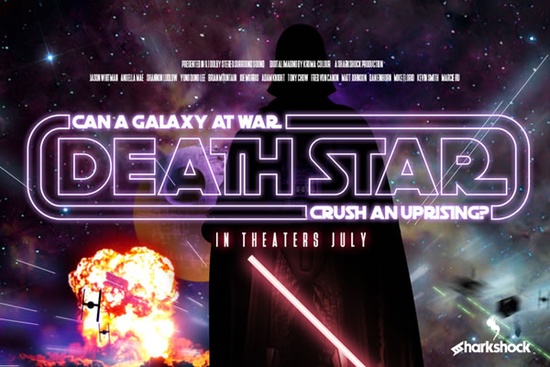
If you're looking for a bold, retro-futuristic display font that instantly evokes 1980s sci-fi posters and fan-made Star Wars merch, the Death Star Font is a solid, no-frills choice. It’s not a full-featured text font it’s designed for impact at larger sizes, like headlines, t-shirt graphics, or social media banners. Think of it as the kind of typeface you’d see on a vintage arcade cabinet or a handmade “Rebel Alliance” patch, not something you’d use for body copy.
What makes Death Star Font work for real projects?
It’s a grotesque all-caps display font with geometrically rounded curves and minimal stroke contrast hallmarks of mid-80s design. That gives it a clean, slightly playful, yet authoritative presence. Because it’s built for visibility and personality (not readability at small sizes), it shines on print-on-demand products: think crewneck sweatshirts, enamel pins, or sticker sheets where legibility isn’t the priority vibe is.
Kerning is intentionally tight, so it reads best when scaled up aim for 48pt or larger in most design apps. If you’re layering it over photos or busy backgrounds, its strong silhouette holds up well. Just keep in mind it only supports basic Latin characters and standard punctuation, so it won’t cover accented letters or extended language sets.
How to get the most out of its OpenType features
The font includes alternates and ligatures subtle but useful touches, like a double-L glyph that overlaps just so, or a custom ampersand. These aren’t automatic; you’ll need to access them manually through your software’s Glyphs panel (in Adobe Illustrator, Photoshop, or Affinity apps) or via OpenType-aware tools like Canva Pro or Figma with plugins. The included poster PDF shows exactly which glyphs are available save it as a quick reference.
One practical note: if you convert the font to outlines (e.g., before sending to a printer or SVG cutter), those alternates disappear unless you’ve already applied them. So always finalize your glyph choices before outlining.
Pairing suggestions that actually work
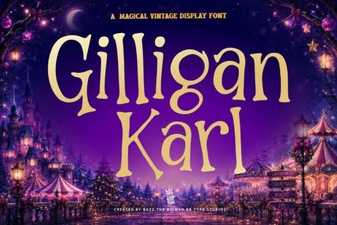
For an authentic movie-poster feel, pair Death Star Font with Deutschlander a sturdy, condensed sans-serif that mirrors the typography used in official Star Wars marketing from the era. You’ll find similar energy in fonts like Stacked Remember Font, which also leans into bold, stacked geometry for display use. For contrast, try Gilligan Karl Font a friendly, hand-drawn alternative when you want to soften the sci-fi edge without losing character.
If your project straddles retro and rustic say, a “Tatooine Tacos” food truck sign Cowboy Howdy Font adds a grounded, Western twist that still feels cohesive next to Death Star’s sharp angles. And for something more ornate but equally nostalgic, Aaksaraan Valeriana Font brings elegant swirls and high contrast, balancing Death Star’s rigid structure.
Who should consider this font and who might want to skip it
This works best for:
- Print-on-demand sellers creating themed apparel or accessories (especially Star Wars–adjacent or general retro sci-fi niches)
- Small business owners designing limited-run event posters, festival signage, or local shop banners
- Crafters making vinyl decals, iron-ons, or laser-cut wood signs where bold, simple shapes translate cleanly
- Bloggers or social media creators building consistent visual branding around geek culture, gaming, or nostalgia themes
It’s less ideal for:
- Long-form text or websites needing paragraph readability
- Brands requiring multilingual support (no diacritics or extended Latin)
- Designers expecting automatic stylistic sets or contextual alternates without manual input
One final tip: test how it renders across devices. Some web browsers or email clients don’t fully support OpenType features so if you’re using alternates in a digital banner, preview it in Chrome, Safari, and Firefox to confirm consistency.
Before you download or license: Check the preview images and test file included with the Creative Fabrica listing. Type out your intended phrase especially if it contains repeating letters (like “LL”, “TT”, or “OO”) to see how the kerning and alternates behave in context. And if your project needs both display impact and versatility, consider pairing it with a flexible companion like Stacked Remember Font for subheads or captions.
Try It Free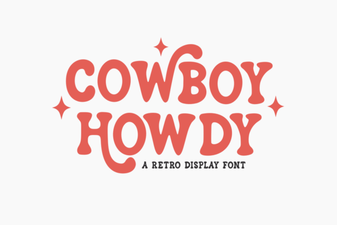 Cowboy Howdy: a Wild West Font for Bold Design
 Create Vintage Projects with a Magic Retro Font
 Gilligan Karl: Font Design & Project Ideas
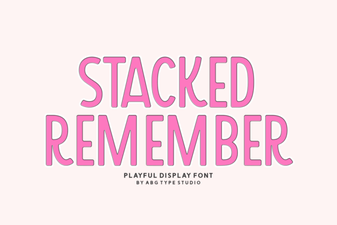 The Stacked Remember Font Design Concept
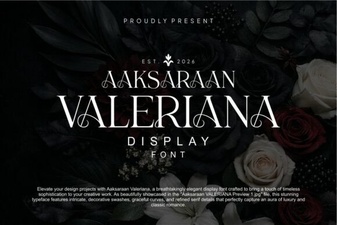 Download Aaksaraan Valeriana Font for Your Design Projects
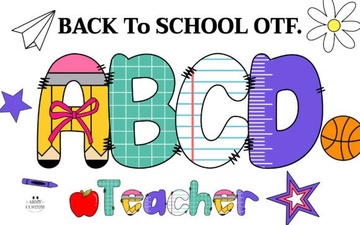 Military-Inspired Fonts for School Projects and Design